Conservatory Roof Replacement OxfordGet a quote
The domed Radcliffe Camera beside a stone street lined with college buildings, with bicycles parked along the railings under a grey sky

Conservatory Roof Replacement Oxford

Tiled, glass or fresh polycarbonate: find the roof that turns your conservatory into a room you use all year, then compare prices.

Get a quote for a new roof

Your contact details

We pick out a conservatory roof specialist active around your postcode and name them to you first. Your details only reach them once you say so, and you never pay us a penny.

Semi-detached houses make up 31.7% of Oxford’s homes and terraces 27.8%, and 18 conservation areas cover the city from the colleges out to Wolvercote.

Conservation areas, Article 4 and your Oxford roof

Does your address change which roof you can have? Sometimes. In parts of the city the council has a say in how the outside of a house looks, and that matters most when a glazed roof is about to turn into a tiled one.

Victorian North Oxford

Park Town and the big brick villas with stone dressings mostly date from 1860 to 1900. The council’s North Oxford overview says conservatories were part of these houses from the start, so a glass roof often sits more naturally here than tiles.

Jericho’s terraces

This 19th-century artisan suburb sits under an Article 4 Direction. In plain terms, some small jobs that would elsewhere go ahead without an application here need one. Outside changes facing a street or the canal can need permission, so ask before a roof changes its look.

Headington Hill, Wolvercote and beyond

The city has 18 conservation areas, and they spread a long way past the colleges. Inside one, swapping old glass for new is seldom a problem, but tiles are worth a word with the planners first.

Semis and terraces elsewhere

Outside those areas, much of Oxford is semis and terraces, where a new roof of the same kind is usually straightforward. Wherever you live, tiles still bring in Building Regulations, which the Oxford rules page explains.

A medium glass roof in Oxford, about 3.5 x 3.5 m, typically costs

£4,200 to £6,500

That is a guide, not a quote. It comes from national price bands lifted by our own rough adjustment for South East prices. Tiles cost a good deal more and polycarbonate a little less.

Work out your own roof on the Oxford price page

How the new roof goes on

Every firm has its own way of running a job, and Oxford weather gets a vote too. Broadly, though, it moves through four stages, and a glass or polycarbonate roof reaches the end of the third far sooner than a tiled one reaches the fourth.

  1. A look at the frame

    Someone measures up, checks the frames are level and asks about leaks. Where tiles are planned, the building control application goes in before anything is taken apart.

  2. Back to the frame tops

    The glazing or sheets are lifted out and the tops of the frames are cleaned and made ready. The room gets covered over at night so it stays dry.

  3. Fixing and sealing

    Glass and polycarbonate go in, are sealed and trimmed, and those jobs are often finished here. A tiled roof gets its lightweight frame, insulation and tiles instead.

  4. Ceiling, gutters and certificate

    Solid roofs then need gutters, a plastered ceiling and often lights. Building control inspects as it goes and issues a completion certificate once the work passes.

£730

including VAT, Oxford City Council’s 2026/27 building control charge for alteration work costing £10,001 to £20,000

The council’s fee for a solid roof

Once tiles replace the glazing, the room stops counting as an exempt conservatory, so a Building Regulations application normally follows. That check has a price. We set Oxford’s published charge beside those of the neighbouring councils.

Read the Oxfordshire fee study, or see when planning and building regs apply in Oxford.

Things Oxford owners ask early on

Tap a question to open the answer. For cost in more depth, the Oxford roof prices page has a calculator and the full ranges.

Can the frame stay while only the roof is replaced?

In a lot of cases, yes. If the uPVC or aluminium frames are sound, square and not sagging, a firm can lift off the old roof and fit a new one onto them. A solid roof is the one to be careful with: it weighs far more, so the frames, base and foundations get checked first, and some need strengthening.

How many days does a conservatory roof replacement in Oxford take?

Glass or polycarbonate often takes a couple of days on site. A tiled roof takes longer, usually several days, because a new structure is built, insulated and tiled before the ceiling is plastered. Weather and access in a tight Oxford garden can add to that.

Will tiles make the room too dark?

Darker than glass, certainly. Plenty of people decide that is worth it for a room they use in January and July alike, and a lantern or a few rooflights set into the tiles win back a good deal of daylight.

Does Oxford City Council need to know about a new conservatory roof?

Replacing one clear roof with another rarely involves the council. Tiles change that, because a solid roof takes away the room’s exempt status, so building control expects an application. Planning permission is needed less often, though listed homes and parts of the city’s conservation areas are stricter.

Is glass worth it over new polycarbonate?

If your complaints are rain noise and a roof gone cloudy, glass usually fixes both. Solar control units also cope with summer heat far better than old sheets. They cost more and weigh more, so the frame needs a look first.

Is winter a bad time to replace the roof?

Not necessarily. Firms fit roofs all year, and the quieter months can be easier to book. In cold or wet weather the aim is to keep the room open for as little time as possible and covered every night.

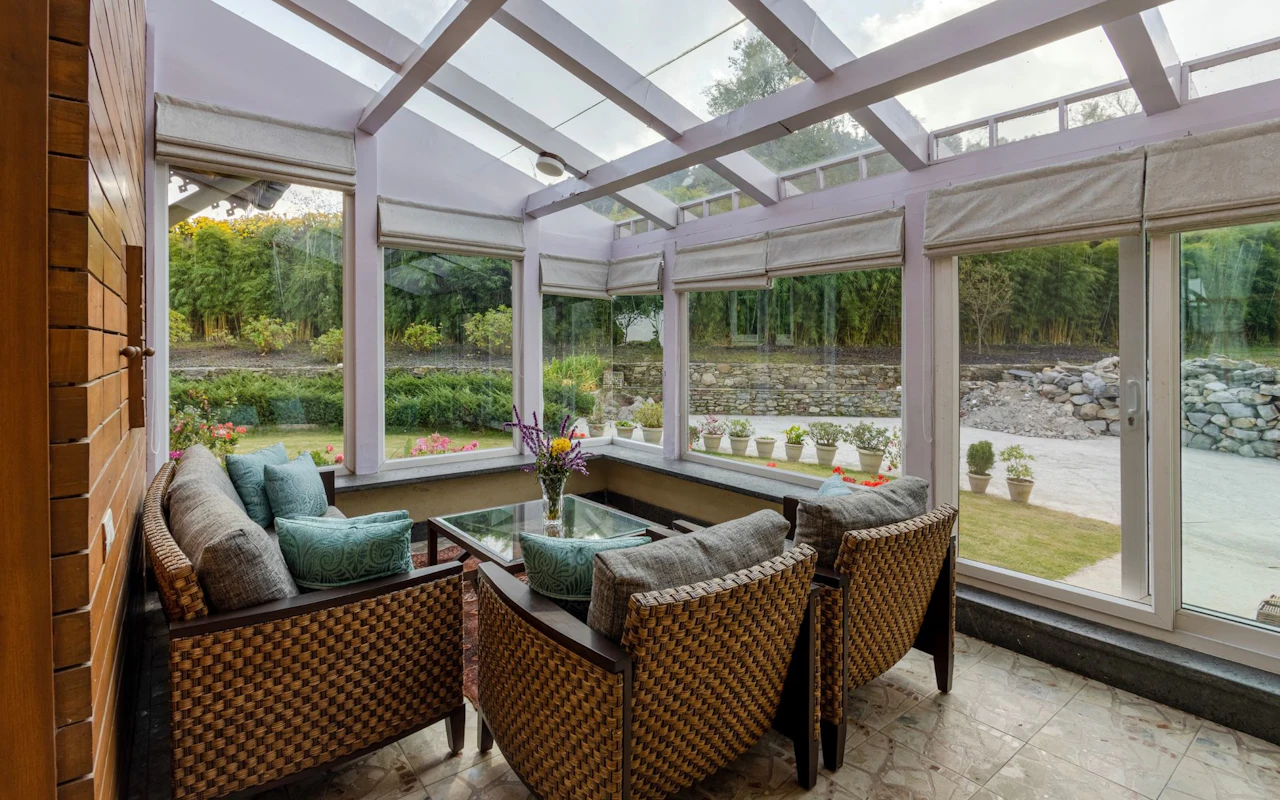
A glass-roofed sunroom with wicker armchairs, blue cushions and roller blinds, looking out over a garden

A conservatory should be the room everyone wants, not the one nobody uses.

Get a quote
Get a quote