Conservatory Roof Options for Oxford Homes
Too hot, too cold, too loud or just leaking? The right roof depends on which of those keeps you out of the room now.
Glass, polycarbonate and tiles at a glance
A quick read first. Below the table we go through each roof in turn, including the parts sales brochures tend to skip.
| Your concern | New glass | New polycarbonate | Tiled warm roof |
|---|---|---|---|
| Daylight | Plenty, and less glare than an old roof | Decent until the sheets cloud over | Lowest; rooflights or a lantern claw some back |
| A hot July afternoon | Far more bearable with solar control units | Tends to bake | Behaves like any room in the house |
| A cold January evening | Fair to good, depending on the units | Struggles to hold heat | Warmest, thanks to the insulation |
| Heavy rain overhead | A soft patter | A real drumming | Barely noticed |
| Load on the frame | More than polycarbonate | Very little | Much more; frames and base need checking |
| Council involvement | Normally none | Normally none | An application to building control, as a rule |
For what each roof costs in Oxford, size by size, see the conservatory roof replacement cost guide.
A tiled warm roof
This is the one most people come asking about. The glass or polycarbonate comes off, a lightweight timber or steel frame goes up, and it is insulated, tiled on top and plastered underneath.
Once it is finished, the room behaves much like the rest of the house. Insulation holds the heat in through winter and keeps the worst of the sun out in summer, and a hailstorm sounds about as loud as it does in your kitchen. From the garden, a tiled roof can also sit more naturally against a brick semi or a Victorian villa than a glazed one.
The price for all that is light and weight. The sky disappears from overhead, which is why so many owners add a lantern or a few rooflights. And the frames, any dwarf walls and the foundations now have to carry far more, so it costs the most of the three and usually needs Building Regulations approval.
Worth asking before you sign
Will the frame need a ring beam or corner posts, and who sends the building control application?
A new glass roof
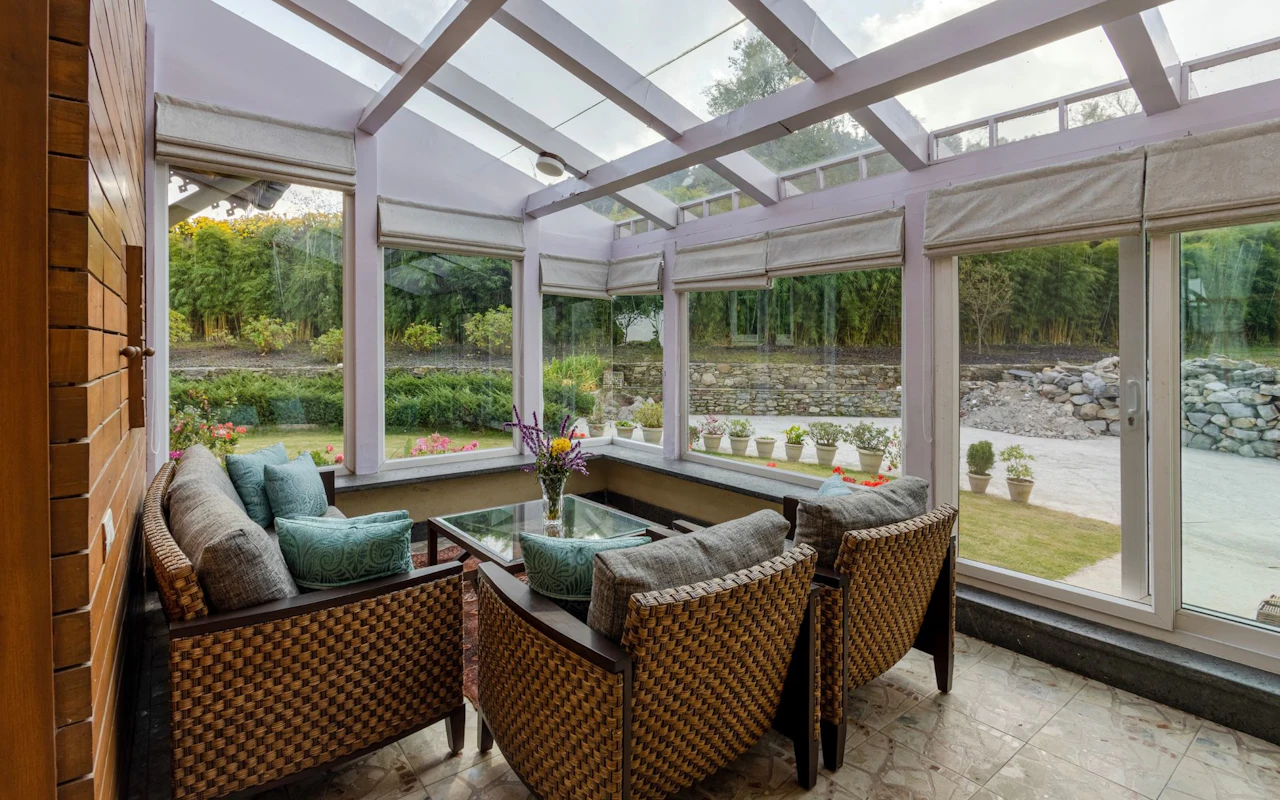
Do you love the light but hate the heat? Then a new glass roof deserves a proper look before you commit to tiles. Double-glazed roof units have come a long way, and many now carry coatings that cut glare and solar heat.
You keep the garden and the sky as part of the room, which is the reason most people built a conservatory in the first place. Solar control and self-cleaning coatings make a real difference to comfort and upkeep compared with glass from twenty years ago, and a straight swap normally needs no council paperwork at all.
It is still a glass room, though. On a frosty January evening it will not match an insulated solid roof, and glass weighs more than polycarbonate, so a firm should check the frame can carry it.
Suits you if
The room faces south or west, you use it mostly from spring to autumn, and daylight matters more to you than winter warmth.
Fresh polycarbonate sheets
Polycarbonate is the plastic multiwall sheeting on a lot of older conservatories. Fitting new sheets into the frame you have is the lowest-cost fix, and it can make sense if money is tight or you plan to move.
It costs less than glass and far less than tiles, and because the sheets are so light, it adds almost nothing to the load on an older frame. If the room only needs to stop leaking and look tidy again, that may be all you need.
Do not expect it to change how the room feels. Heavy rain on polycarbonate is hard to talk over, it does least of the three to hold heat, and the sheets tend to discolour and turn brittle with age, which is often why people are re-roofing in the first place.
A sensible stopgap when
You are selling within a few years, or the budget simply will not stretch to glass this year.
Can your frame take the weight?
This is the question that decides a lot of tiled roof jobs. A conservatory frame was built to hold up a light, glazed roof. Put a timber or steel structure, insulation, plasterboard and tiles on top, and the load on the frames, walls and foundations goes up considerably.
That is why building control, under the Building Regulations, will want to know the existing structure can carry it. In a lot of cases a firm adds a ring beam (a strong beam that runs round the top of the frames and spreads the weight) or posts hidden in the corners. Sometimes the foundations need looking at too.
A good firm will tell you plainly if your frame is not up to it. If one says it is all fine without looking at the base, ask them how they know.
Questions to put to a surveyor
Ask these on the visit and listen for a straight answer.
- Are the frames level, square and strong enough for this roof?
- How deep are the foundations under the dwarf walls?
- Where will the rainwater go, especially close to a neighbour?
- Who sends the Building Regulations application, and in whose name?
Write the answers down, so you can compare quotes like for like.
Which roof suits which Oxford house?
There is no rule here, but the house you live in nudges the choice. Semi-detached homes are the largest group in the city, at 31.7% according to the council's Census 2021 briefing. A conservatory on the back of a semi usually has room around it, which makes a tiled roof with gutters and fascias easier to fit neatly.
Terraces, at 27.8% of homes, are a different story. The conservatory often runs up to the boundary, so drainage and the party wall need thinking about, and a lighter glass roof can be the simpler answer.
In North Oxford, the council's conservation area overview describes large Victorian houses in brick with stone dressings and high tiled roofs, and notes that conservatories were a feature of them. On a house like that, a glazed roof may sit more comfortably with the original look, and in a conservation area the look matters to the planners. Our guide to planning and building regs in Oxford explains when that comes into play.
Not sure which roof? Get a quote
A local firm can look at your frame and base, then price the roof that actually suits it.
We pick out a conservatory roof specialist active around your postcode and name them to you first. Your details only reach them once you say so, and you never pay us a penny. How it works
All received, many thanks.
From here we look for a conservatory roof specialist who takes on work around your postcode, then come back to you with the firm’s name so you can look them up.
Your details stay with us until you give the go-ahead. Not keen on the firm we suggest? Tell us, and we drop it there.